Topic Last Modified: 2009-08-16
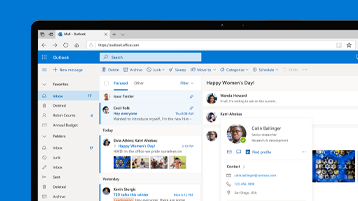
Outlook Web App lets you use a Web browser to access your mailbox from any computer that has an Internet connection. You can use it to read and send e-mail messages, organize contacts, create tasks, and manage your calendar.
Supported Browsers
You can access your mailbox through any browser that supports HTML 3.2 and ECMA. This includes Internet Explorer, Mozilla Firefox, Apple Safari, and other Web browsers on computers that run UNIX, Apple Macintosh, or Microsoft Windows. For more information, see Outlook Web App Supported Browsers. Outlook Web App Light is a simpler version of Outlook Web App that supports almost any browser.
Working with Messages
In addition to reading and sending e-mail messages, you can customize your messages by, for example, adding attachments, requesting receipts when a message is read or delivered, and adding a category to a message.
You can use folders to organize your messages just as you'd use a file system to organize papers. You can manage the messages you receive by using rules to sort them into different folders.
For more information about how to work with messages, see Mail.
Using the Calendar
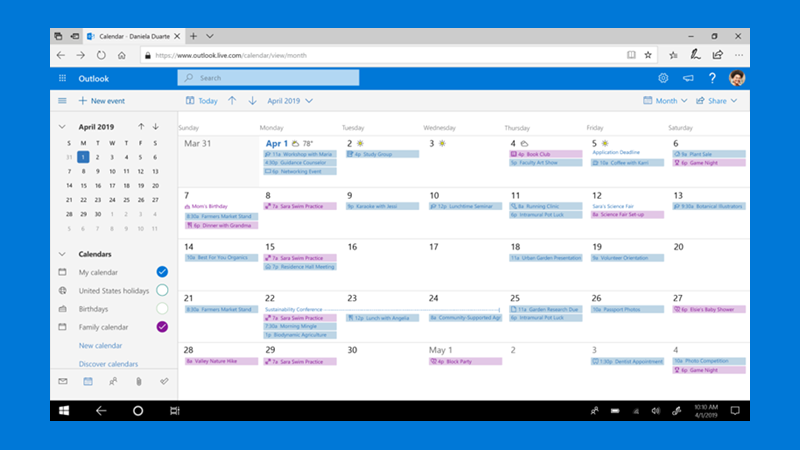
Your calendar is like a calendar on the wall, but with lots of extra features. When you add an appointment to your calendar, you can customize it in many ways, for example, adding attachments, filling in as many details as you want, setting a reminder, or making it a repeating appointment so it's automatically added to your calendar on a regular basis.
In addition to creating appointments, you can set up meetings. A meeting is just like an appointment, except you send an invitation to other people. Each person you invite gets an e-mail message with the details of the meeting. Depending on their e-mail service, they may be able to use the message they receive to add the meeting to their own calendar.
See Calendar for more information about how to manage your calendar.
Contacts and Groups
The Contacts folder of your mailbox is like a Rolodex or address book with an entry for each person or group you want to store information about. You can create a contact to store information about a person or business you want to communicate with.
Groups let you create a single entry that includes multiple contacts. When you send a message to a group, it goes to every contact in the group.
For more information about Contacts and Groups, see Contacts.
Customizing
Your mailbox is ready to use as soon as you sign in. You don't have to change any settings or turn anything on or off to start sending and receiving e-mail messages. However, you might still want to change some settings to suit your preferences.
You can do things like automatically check spelling in your e-mail message before it's sent, add a signature to the messages you send, and select a default font for your messages.
For more information about how to customize Outlook Web App, see Options Reference.
Accessibility
There is a light version that's optimized for users who are blind or who have low vision. For more information, see Outlook Web App Light.
Getting Help
To get help in the window you're working in, click the help icon
on the toolbar.
If you know who administers your e-mail, contact them for information about how to use Outlook Web App over your intranet or the Internet.
Signing Out
When you finish using your mailbox, be sure to click Sign out on the toolbar, and then close all browser windows. Signing out helps prevent someone else from using the computer to access your mailbox. Even if you plan to continue using the computer to visit other Web sites, click Sign out and close all browser windows after every session.
Other Ways to Connect to Your Mailbox
- Connect to your mailboxusing your favorite e-mail program In addition to Outlook Web App, you can access your mailbox with any of the following:
-
Office Outlook 2007.
-
Mobile phones that run Windows Mobile software and support Exchange ActiveSync, including Windows Mobile 5.0 and Windows Mobile 6.0. For more information, see Set Up Your E-Mail Account on Your Mobile Phone.
-
Mobile phones that use POP3 or IMAP4 e-mail programs, for example, the Apple iPhone.
-
POP3 or IMAP4 e-mail programs, for example, Outlook Express, Entourage for MAC OS X, Mozilla Thunderbird, and Windows Mail.
-
Office Outlook 2007.
- Configure voice mail You can enable voice mail by adding your mobile phone number to your account. By enabling voice mail, you can receive voice mail sent to your mobile phone in your Inbox. For more information, see Set Up Your Voice Mail.
What else do I need to know?
-
To help protect your mailbox from unauthorized access, Outlook Web App automatically closes its connection to your mailbox after a period of inactivity. This is especially important if you access your mailbox from a public-access computer or Internet kiosk. If your connection closes before you're finished, refresh your browser and sign in again.
-
Some features described in the Help may not be available, depending on the configuration of the server that hosts your mailbox.
What if I want to know more?